Welcome to the revamped Trademark Blog. The Trademark Blog started in May, 2002. The world was different then – people guessed URLs by typing trademarks into browser bars. AOL was a valuable brand. Presidents were younger than your grandparents.

This fast-paced world of flying cars, teleportation, and jet packs,  calls for a new blog design, and email subscriptions, which feature I will activate when I get around to it.

Thank you to the hard working folk at LexBlog for migrating all 5,400 posts from the original vellum version.

Stay tuned.


Hanesbrands v Keds, LLC and SR Holdings, 1:20-cv-11354-IT (D Mass May 21, 2021)

Hanes, successor to Champion, has been licensing the CHAMPION brand in relation to shoes, from Keds, for decades.  Keds has been selling KEDS CHAMPION in the U.S,. and several other jurisdictions. Hanes was free to use in non-U.S. jurisdictions where Keds had not acquired superior rights. The licensing agreement had included a moratorium during which Hanes could not contest Keds’ “historic use” of the CHAMPION mark in non-U.S. jurisdictions. Hanes alleges that Keds exploited the moratorium by deliberately expanding into various jurisdictions such as Taiwan, Austria, and Korea.  I guess it depends on what the meaning of historic” is.

In addition to various contract causes, Hanes sues Keds on trademark, relying on the extraterritorial effect of the Lanham Act.

The court reviews all the old extraterritorial favorites: Person’s, Steele v. Bulova, Vanity Fair, and Cecil McBee. and concludes:

Text of Hanes v Keds:

hanes v keds us ma extra decision

McGowen Precision Barrels v Proof Research, TTAB can no. 92067618 (precedential).

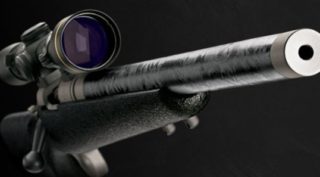
Petitioner seeks cancellation of Respondent’s registration for a configuration trademark:

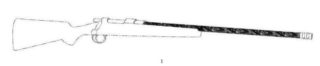
a gun barrel trade dress registration described as:

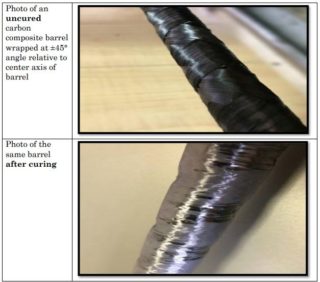
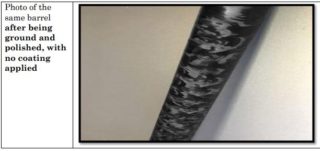
The “mottled” appearance was created by wrapping carbon fiber around a gun barrel, “curing” the fiber, grinding it and polishing it. As carbon fiber is substituted for steel on barrels to decrease weight and provide other functional benefits, and this pattern is the resulting appearance of a particularly advantageous method of wrapping fiber on a barrel (and was patented as such), the pattern is functional and thus unregistrable as a trademark.

TTABlog discussion here.

Text of TTAB decision in McGowen v Proof Research


Plaintiff alleges ownership of SUNCOO trademark for disposable face masks, which masks it sells on Amazon. Various defendants allegedly sold counterfeit SUNCOO masks. Amazon purchased a shipment of SUNCOO-branded masks that were in fact counterfeit, Amazon sold such masks under plaintiff’s ASIN, inadvertently, and has indicated to plaintiff that it was cooperating with regard to preventing the sale of counterfeit product. However, Amazon “lapsed” and sold the counterfeit product on two additional occasions. Plaintiff brought a prelim motion, which was granted.

Text of Kinsley Technology v Ya Ya Creations, 1:2020cv4310, DKt 147 (CD Cal 2021)


Modellbahn Ott Hobbies dba Supreme Hobbies v Velcro, et. al., 20 cv 03526 (LLS) (SDNY May 20, 2021)

From the complaint: Plaintiff, doing business as Supreme Hobbies, contracted with Amazon to sell goods to customers on Amazon. The products were obtained from an authorized distribitutor of Velcro, American Tombow, Rubiks, Mattel and Koala Tools. The defendants published IP complaints with Amazon falsely alleging that the products were counterfeit. Amazon teminated its contract with plaintiff. Brand protection companies Incopro and Yellow Brand are among the defendants.

Interesting facts, but no apparent connection to New York. Several defendants dismissed for lack of personal jurisdiction.


Text of decision in Modellbahn Ott Hobbies v Velcro

Plaintiff asserts rights in the SLEEP NUMBER and NUMBER BED marks for air mattresses. Defendants compete. Defendants allegedly used” plaintiff’s actual trademarks as paid search terms and as identical phrases in their own web-based advertising in text pages, combined text and graphical pages, as terms embedded in linked internet address urls, and in other fashions.” Page 6.

The district court instructed the jury that a likelihood of confusion must exist at the time of purchase, and, based on that instruction, the jury rejected the trademark infringement claim.

On appeal, the Court relied on the 1962 amendment to the Lanham Act, which eliminated reference to “purchasers” when describing actionable confusion. Pub. L. No. 87-772, 76 Stat. 769, 773 (1962), quoted at page 12, for the proposition that Congress did not intend that actionable infringement be limited solely to a likelihood of confusion at the time of purchase.

Here, because a jury question existed as to the issue of consumer sophistication, a plaintiff should not be barred from proving presale, initial-interest confusion.

Prof Goldman is not happy with this decision.

Text of Eighth Circuit decision in Select Comfort v Baxter


California water bottle company sues unknown entities for merging, manipulating, altering, and “hijacking” plaintiff’s product listings and consumer reviews causing them to be associated with defendants’ products instead.” There is a Section 43(a) claim that alleges confusion as to origin, but plaintiff doesn’t appear to allege ownership of a trademark. The complaint alleges that “misappropriated” consumer reviews  are false statements either to origin or to qualities or characteristics.

Text of complaint: jordane v john doe sdny complaint tortious

AWGI. LLC v. Atlas Logistics, Inc.; Atlas Van Lines, Inc.

Justia summary: Atlas Movers federally registered the “Atlas” mark for “transportation of household goods of others,” first using “Atlas” in 1948 when it formed Atlas Van Lines, providing transportation and logistics services, primarily moving household goods. Since 1970, its division, STG, has provided logistics services for non-household goods shipments. Atlas Movers eventually focused more on logistics, forming Atlas Relocation Services in 1995. In 2007, Atlas Movers began marketing its service as “Atlas Logistics.” and renamed its logistics company Atlas Logistics, which can ship, or arrange the shipment of, any commodity. Eaton manufactures and distributes steel. Eaton created Atlas Trucking in 1999, then expanded to ship goods other than steel and metal for companies in addition to its own. It developed Atlas Logistics in 2003 as an adjunct to Atlas Trucking. Eaton knew of Atlas Van Lines. Atlas Movers sued in 2017 for infringement. Eaton answered and counterclaimed that it owned the Atlas Logistics mark. The Sixth Circuit affirmed a judgment in favor of Atlas Movers, upholding findings that Atlas Movers marketed “Atlas” to an extent that the public recognized it, that the parties’ services are related because they engage in at least some of the same transportation services, that the marks were functionally identical, and that there was actual confusion.

Text of decision:

sixth circuit atlas