Beauty Pageant fails to show irreparable harm in motion for prelim against former licensee.
[embeddoc url=”https://www.schwimmerlegal.com/wp-content/uploads/sites/833/2019/02/mrs-united-states-prelim-2-2.pdf” download=”all”]NHL v The Hockey Cup re Trade Dress in Stanley Cup

The National Hockey League owns registered rights in the configuration of the Stanley Cup. It sells replicas of the trophy filled with ice from Stanley Cup finals through its online store, Stanley Cup charms and the like. Defendant sells Stanley Cup-shaped drinking stein. NHL defeats motion to dismiss, alleging ownership of non-functional aspects of
Fed Cir: Laerdal Medical v ITC – ITC Should Address Sec.1337 Pleading Defects Pre-Proceeding
Plaintiff filed a complaint with ITC alleging, inter alia, trade dress infringement by respondent. Respondent defaulted. ITC declines to issue relief regarding trade dress, finding that that “Laerdal failed to plead sufficiently (1) that it suffered the requisite harm, (2) the specific elements that constitute its trade dresses, and (3) that its trade dresses
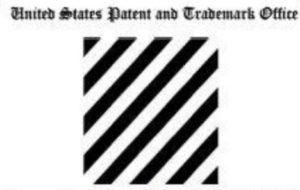
Off-White Sues Brooklyn Lighthouse for Counterfeiting
[embeddoc url=”https://www.schwimmerlegal.com/wp-content/uploads/sites/833/2018/12/off-white-brooklyn-counterfeiting-complaint-1.pdf”]
2d Circuit: Sleepy’s v Sleep Number – Can You Be Defamed To Your Secret Agent?

Plaintiff Sleepy’s sold a line of mattresses manufactured by a competitor, Defendant Select Comfort. Sleepy’s line performed poorly in comparison to a ‘slightly different’ line sold by Select Comfort in its own stores (which line had ‘exactly the same’ technology and basic components as Sleepy’s line). Select Comfort thought that Sleepy’s didn’t adequately advertise their
Test of Fed Circ Decision in Converse v ITC
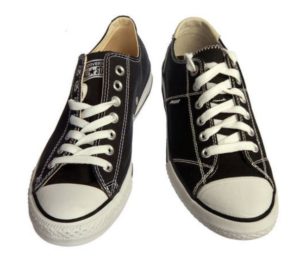
I spoke about this decision at the John Marshall Law Conference last week. I think the bit about comparing defendant’s product to plaintiff’s mark, on page 24, seems like a mistake. I think in a non-trade dress case the trier of facts compares the marks to each other, and considers the relatedness of the goods/services.
Today’s Pleading Quiz – What Do People Think When They See Pictures of Women on a Club’s Social Media Account
I think federal causes are tricky to plead in this one.
Defendant operates a strip club in Long Island. Plaintiffs are 19 women, all of whom seem to be well-known professional models. Defendant allegedly reproduced photos of plaintiffs on its Instagram (or other social media) accounts, and ‘intentionally altered’ the images ‘in order to make
Interesting Lawsuit: Bluetooth SIG v Fiat Chrysler re Use of BLUETOOTH in Car Communications System


Interesting case. Bluetooth SIG licenses BLUETOOTH marks to entities that sell Bluetooth-compliant equipment. Mere re-sellers seem to not need to pay license fees. Defendant Fiat Chrysler utilizes audio components that themselves may be identified as Bluetooth-compliant, however Bluetooth SIG alleges that when defendant incorporates those components into the car’s system, the system itself may
“a blood oath never to use the name Lynyrd Skynyrd again.”
until the tribute tour, and then the film.
From Justia’s summary:
A 1988 consent order settled a suit brought by plaintiff against past and then present members of the rock band known as Lynyrd Skynyrd, seeking to clarify each party’s rights with respect to the use of the name “Lynyrd Skynyrd” and their rights to
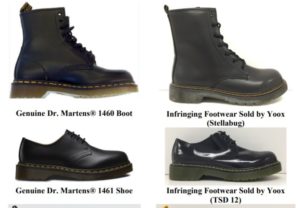
Dr Martens v Yoox Net-a-Porter re Trade Dress
[embeddoc url=”https://www.schwimmerlegal.com/wp-content/uploads/sites/833/2018/10/dr-martens-trade-dress-yoox-complaint-1.pdf”]