Webpage promoting textile didn’t provide means of completing a sale and thus is not a ‘point of purchase’ display (see webpage in decision below). I agree with TTABlog – maybe the Board needs to be more flexible in the era of the Internet.
[embeddoc url=”https://www.schwimmerlegal.com/wp-content/uploads/sites/833/2019/04/siny-fed-cir-1.pdf” download=”all”]Texts of Documents in MillerCoors v. Anheuser-Busch (the Super Bowl corn syrup ads)
MillerCoors alleges that Anheuser-Busch tv ads (which debuted on the Super Bowl) deceive consumers into believing that MILLER LITE or COORS LIGHT contain corn syrup (specifically, high-fructose corn syrup). Attached below are MillerCoors’ brief in support of its motion for a preliminary injunction, and the report of its expert, discussing his study that concludes that
Recent Trademark Tweets
I asked and @saucony answered! Thanks @yourpalmal for making this happen! pic.twitter.com/GBAgv1yypQ
— Josh Gondelman (@joshgondelman) April 2, 2019
— release the full report (@TrademarkBlog) April 2, 2019
Today on
“What’s The Mark?”:Apple application for registration states:
“The mark consists of the side and front views of the configuration of a wireless earbud
RXD Media v IP Application Development – EDVA Decision Affirms TTAB Decision re IPAD Trademark
[embeddoc url=”https://www.schwimmerlegal.com/wp-content/uploads/sites/833/2019/04/apple-ipad-1.pdf” download=”all”]
SDNY: No Trade Dress In Advertising Lay-out (Laurel Road v Commonbond)
Plaintiff Laurel Road, a bank, ran an advertising campaign. A typical ad looked like this:

A competitor, Commonbond, ran ads, one of which looked like this:

Both banks ran outdoor display ads, sometimes in similar locales, such as the suburban rail-line, MTA North.
Plaintiff brought a trade dress claim, alleging a trade dress that consists
Recent @trademarkblog Retweets
Finding a Bearded Skull Design Merely Ornamental for Clothing, TTAB Affirms Failure-to-Function Refusal https://t.co/c8zKa25Nvn pic.twitter.com/eSAJqFppLT
— TTABlog (@TTABlog) March 6, 2019
KFC has launched a restaurant in China dedicated to a popular Chinese Communist hero. It's a rare matching of an iconic American brand with Communist propaganda. https://t.co/Bd4AieuLdr
— The Associated Press (@AP) March 5,
Failure or Success At Functioning As A Trademark
Maybe I’m relying on anecdata but I think I’m seeing more “Failure-to-Function” fact patterns lately, both in my practice and in TTAB decisions. It could be because trademark lawyers encourage clients to protect everything, so in response, clients attempt to protect everything (including taglines, slogans, catch-phrases, etc.). The failure-to-function issue turns on whether, given the
Recent Tweets and Retweets from @trademarkblog
Global Strategy Group:
— TrademarkBlog (@TrademarkBlog) March 1, 2019
Doing Business In An Activist Worldhttps://t.co/QUB5CEuPCf
USPTO Proposes U.S. Counsel Requirement for Foreign Domiciled #Trademark Applicants And Registranhttps://www.lexology.com/library/detail.aspx?g=9da0674a-9dee-4491-8b5e-d78e4daf40f3
— Marie-Andree Weiss (@MarieAndreeW) March 1, 2019
My book with Dinusha Mendis and @DrRimmer on 3D printing and IP law is out. https://t.co/IvtjDySJYa
— Mark Lemley (@marklemley)
Lanham Act Section 43(a) Class Action (sic) re KONA Coffee
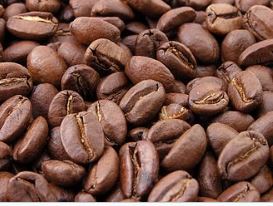
Kona is a coffee-growing region in Hawaii. The Department of Agriculture of Hawaii has a registered certification mark for the mark 100% KONA COFFEE and design. Many entities own registrations for coffee including the KONA element, most disclaiming the term, some slipped by without. Four growers of Kona coffee (from Kona) have now sued 17
SDNY: CHEF CHLOE: Delay Bringing Prelim: Motion to Compel Arbitration
Plaintiff’s one year delay dooms prelim motion. Discussion of interpretation of arbitration clause.
[embeddoc url=”https://www.schwimmerlegal.com/wp-content/uploads/sites/833/2019/02/chef-chloe-sdny-prelim-arbitration-1-2.pdf” download=”all”]