MACK-Daddy-Wedge
MackDaddy2

Second golf blog post today. Roger Cleveland designs golf clubs. He sold his company to plaintiff (which retains the CLEVELAND trademark), then joined defendant, Callaway. Callaway is now indicating on the club head itself that it is ‘designed by Roger Cleveland.’ See illustrations above.

roger cleveland trademark
var docstoc_docid=”162858942″;var docstoc_title=”roger cleveland trademark”;var docstoc_urltitle=”roger cleveland trademark”;

Print

This is a strange fact pattern. Plaintiff alleges that it has operated the PGA event, the PHOENIX OPEN (now known as the Waste Management Phoenix Open) for decades. Defendant approaches plaintiff and alleges that it owns the rights to PHOENIX OPEN. I couldn’t find any press reports on the dispute. Something is not right with this picture.

thunderbirds phoenix open trademark
var docstoc_docid=”162843163″;var docstoc_title=”thunderbirds phoenix open trademark”;var docstoc_urltitle=”thunderbirds phoenix open trademark”;

I’m reading an article “Do Trademark Lawyers Matter” by Gerhardt and McClanahan. The article examined PTO filing data to attempt to answer the question: “does it make sense to hire a lawyer for trademark prosecution?” The article concludes that both a law degree and experience matter. Read the whole article.

The raw PTO ‘success rates’ show by a statistically significant margin that applicants represented by counsel have higher success rates. The ‘true’ difference would likely be even greater than the number reported by the article, because, as the authors note, large filers such as American Greetings, Fox and Hasbro are coded by the PTO as pro se applicants when they use in-house staff to file.

OK, I think my audience consisting mainly of trademark lawyers is not shocked by this finding.

But, to stir up trouble, I find myself pondering now: What metric should be used to identify a ‘good’ trademark lawyer vis-a-vis other trademark lawyers (at least in the context of prosecution)?

The article uses the term ‘success rate’ but does that number tell us everything we need to know? The article correctly notes that there are various points in the life of an application where success has to occur:

(1) ex parte examination;
(2) publication; and, in the case of ITU applications,
(3) the ITU period.

That third point is, for the most part, out of the control of trademark counsel. Whether a statement of use is ultimately filed tends to have more to do with whether the applicant is still interested in that mark, than with any other factor. Interestingly, the advent of the ITU application in 1989 appears to have reduced overall registration rates by twenty percentage points (see page 17). I note parenthetically that I can imagine scenarios where the failure to complete an ITU application can be attributed to bad advice in the beginning, but that is a subject for a future post.

We clearly need a Bill James or Nate Silver to help us devise the Trademark Lawyer equivalent of Wins Above Replacement.

How about: award the filing attorney one point for avoiding an office action, half a point for over-coming an office action, one point for avoiding an inter-partes protest, and half a point for winning a TTAB opposition. Divide by the number of filings, and see who has the highest average. For those who feel slighted by the mere half point for the TTAB proceeding, consider the fees you will receive for the opposition as consolation.

But how to allow for the difficulty of the applications you file? Some filings are (inherently) slam-dunks and some are (almost) unwinnable.

Unfettered by actually studying the problem in any systematic fashion, ever, I have the following hypothesis: The success rates of trademark firms compared to each other should be a very flat bell curve. Imagine that there was a work-assignor with (1) perfect knowledge of the anticipated difficulty of an application, and (2) perfect knowledge of the ability of an attorney. The perfect work assignor would give the slam-dunks to the “less experienced” attorneys. Then, as the cases became more difficult, the assignor gives the work to the more experience attorneys, who make fewer ‘unforced errors’ and can handle the traps for the unwary. However, as you get towards the end of the experience spectrum, the cases become more of the type where the lawyer advises the client of a lower than 50% chance, and the client responds: “give it your best shot.”

So my hunch is that the data set of trademark filings is so large (250k filings/year), that it begins to resemble a perfect work-assignor. I think firms’ success rates (once we agree how to measure it) are going to be very similar.

More musings as they develop. Stay tuned. Please read the article, and please comment.

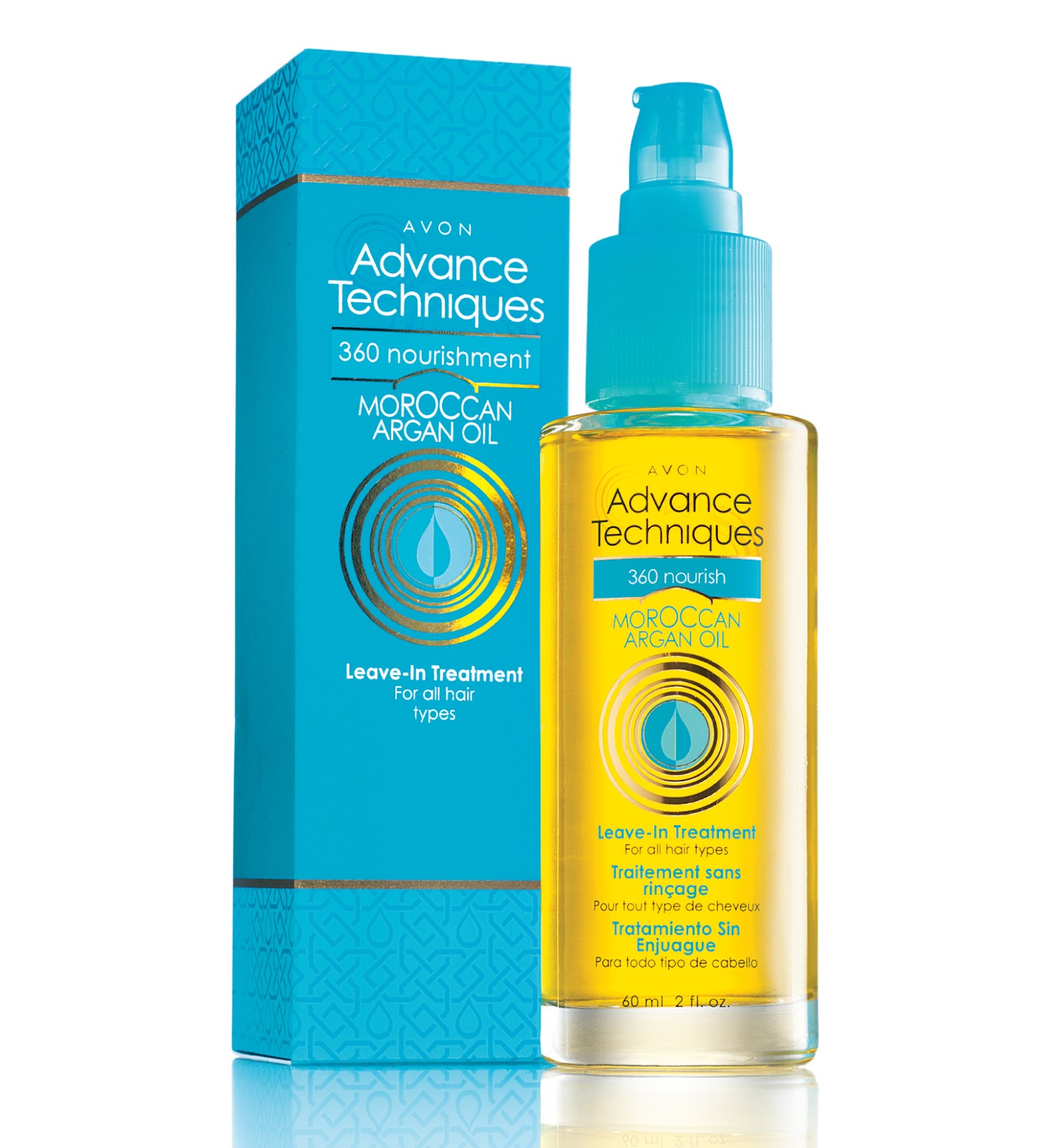
moroccanoilmaroccan oil

I was tempted to go with a photo of the comedian Mo Rocca, but thought the better of it. MOROCCANOIL sues Avon over use of MOROCCAN ARGAN OIL. Argan Trees are found in Morocco. Complaint includes a trade dress claim.

moroccanoil
var docstoc_docid=”162107631″;var docstoc_title=”moroccanoil”;var docstoc_urltitle=”moroccanoil”;

kama sutra sculpture

The owners of the KAMA SUTRA mark are suing a competitor using the mark KAMA SUTRA CLOSET (Kamsult v Kama Sutra Closet, 13cv07403, CD Cal). However I can’t upload the complaint to DocStoc. If I had to guess why, I would suspect the presence of the words KAMA SUTRA in the complaint, and the fact that DocStoc uses content filters.