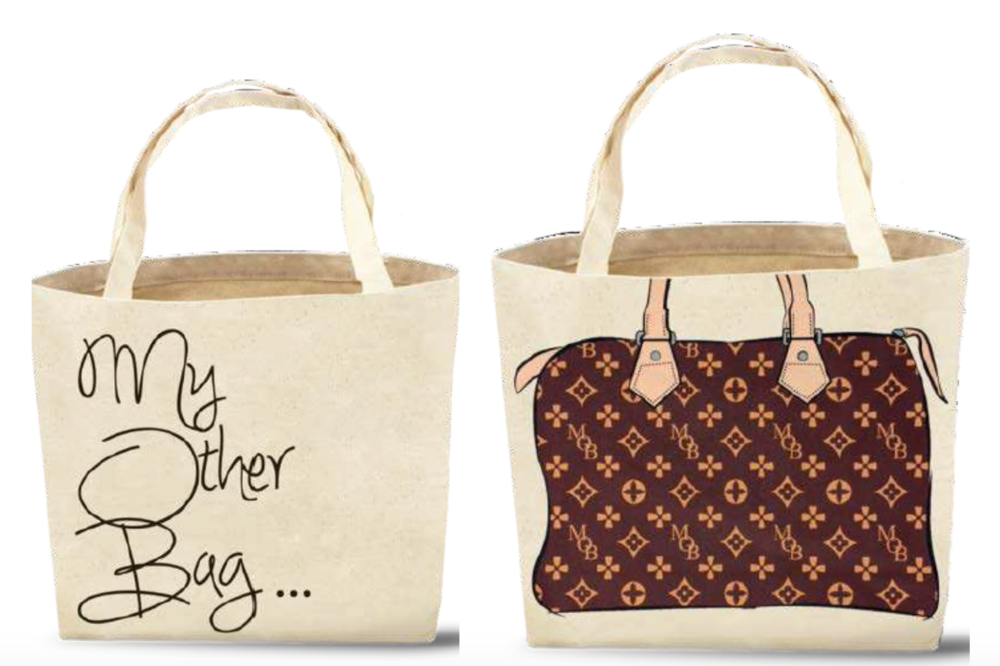
Louis Vuitton v. My Other Bag

Rebecca Tushnet on D Ct decision in My Other Bag

Plaintiff-Appellant Brief

Rebecca Tushnet on 2d Circuit decision in My Other Bag

Law Professor Amicus in 2d Cir appeal of My Other Bag

[embeddoc url=”https://www.schwimmerlegal.com/wp-content/uploads/sites/833/2020/04/louis_vuitton_malletier_s.a._v._my_other_bag_inc.-1.pdf” download=”all”]

Second Circuit

Rogers v Grimaldi

THIRD CIRCUIT

Facenda v NFL Films

Eighth Circuit

Fortis V Warner Bros (CLEAN SLATE)

Ninth Circuit

Mattel c. MCA Records (BARBIE GIRL)

Gordon v Drape Creative (Honey Badger)

Twentieth Century Fox v. Empire Distribution

Tenth circuit

Cardtoons L.C. v. Major League Baseball Players Ass’n, 95 F.3d 959, 970 (10th Cir. 1996) (right of publicity)

District of Colorado

Stouffer v National Geographic (WILD AMERICA)

I was fortunate to have worked on INTA’s brief in the Booking.com Supreme Court appeal. The question presented is:

Whether the addition by an online business of a generic top-level domain (“.com”) to an otherwise generic term can create a protectable trademark.

Booking.com BV sought registration of the mark BOOKING.COM for online travel services. PTO argues that BOOKING is generic and the TLD .COM can’t identify a source, so the composite is generic, without regard to any survey evidence showing the possibility of secondary meaning. Booking argues that the composite mark is at worst, descriptive, and that survey evidence shows secondary meaning.

The INTA’s brief’s focused on (1) avoiding any per se rule covering all top-level domains, given the blurriness of the genericness/descriptiveness line, and because the 1500 or so new gTLDs differ from .COM in meaning; (2) avoiding any exclusionary rule against survey evidence in genericness cases (noting the tautological problem of ‘assuming what one is deciding’); and (3) distinguishing GOODYEAR RUBBER, an 1880s SCOTUS case relied on by the government, holding that [generic term] [entity identifier] (as in Goodyear Rubber, Inc.) was generic. It seems that GOODYEAR RUBBER was a generic term in the 1880’s (who knew).

I note the discussion in Section 3.2 that the most analogous cases are the phone number cases (In re DIAL-A-MATTRESS) that the public recognizes a particular domain name, at worst, as describing the location of that particular business’s online location – and does not identify the genus of those services. In other words, no one says ‘I bought airline tickets through a booking.com.’ Accordingly, such a name could potentially acquire secondary meaning and thus, protectability.

All the briefs can be found on the Scotus Blog here.

[embeddoc url=”https://www.schwimmerlegal.com/wp-content/uploads/sites/833/2020/02/booking-inta-final-2.pdf” download=”all”]

Plaintiff is an author and speaker. She hired defendant to create a website for her. The relationship must have soured as “Defendant convinced GoDaddy to permit her to access Plaintiff’s GoDaddy Account, where she changed the login credentials to prevent Defendant (sic) [seems to mean plaintiff] from accessing the Subject Domain Name. . . .Defendant Jones, a web designer, now maintains exclusive access to Plaintiff’s GoDaddy accounts and passwords. “

[embeddoc url=”https://www.schwimmerlegal.com/wp-content/uploads/sites/833/2020/02/rethann-wilson-copmplaint-2.pdf” download=”all”]